Sinking Sekadau
Price range: $1,500 through $3,000
ou’ll meet collectors from Hong Kong to Tokyo to Singapore to Jakarta, all with…
This Sekadau tree is the most famous agarwood tree of our times. Everyone who had a share in its harvest became millionaires overnight.
It’s not that they sold the wood at inflated prices. It’s that the tree demanded a mighty price for what it was.
Not just that, the entire tree was a gigantic cylinder of solid, carvable goodness. They had to cut it up into massive slabs because they were too expensive to sell as-is. And when I say ‘cut up’… just one ‘smaller’ cut weighed about 20 kilos – and sank like a stone!
You’ll meet collectors from Hong Kong to Tokyo to Singapore to Jakarta, all with stories to tell about the find of the century. It took me years before I could get my hands on some of the Sekadau, and that was only thanks to my close relationship with one of the kingpins of the Chinese market.
And here it is, the first leak to the outside world.
I’ve been to a few of the mansions paid for by this tree, and I’ve watched millions gambled away. There’s still an 18-kg piece of the Sekadau for sale. The only reason it’s still there is because it requires you to sell one of those mansions to pay for it.
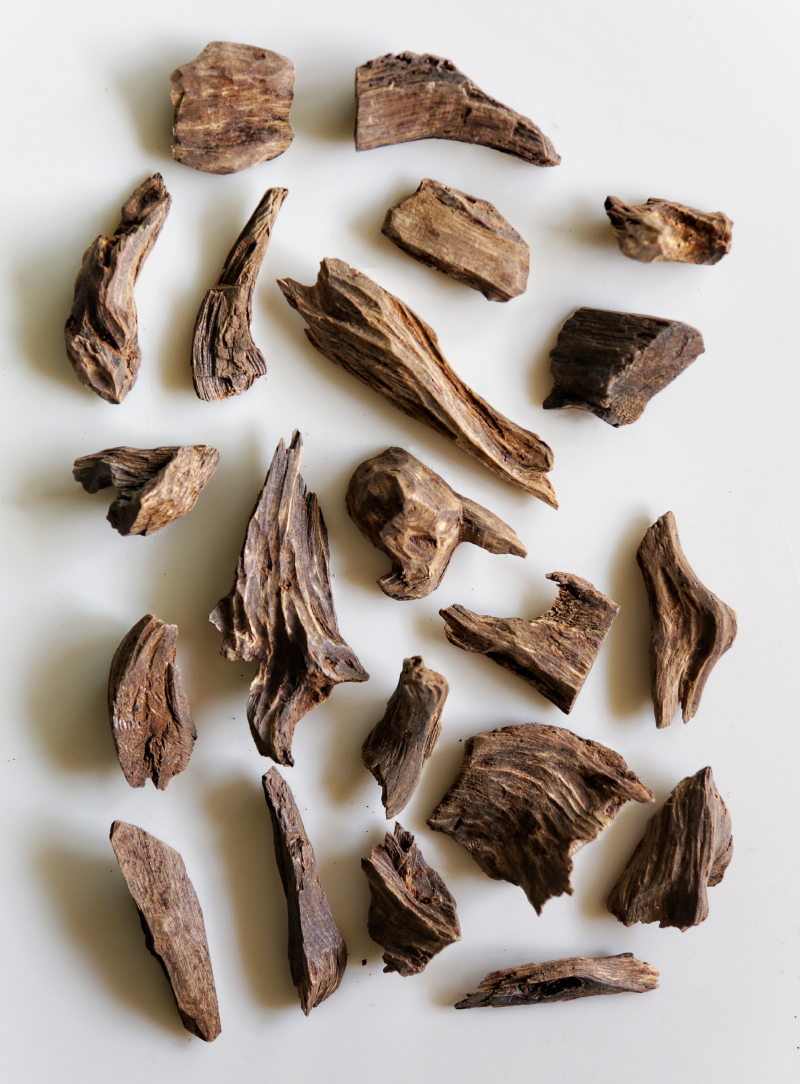
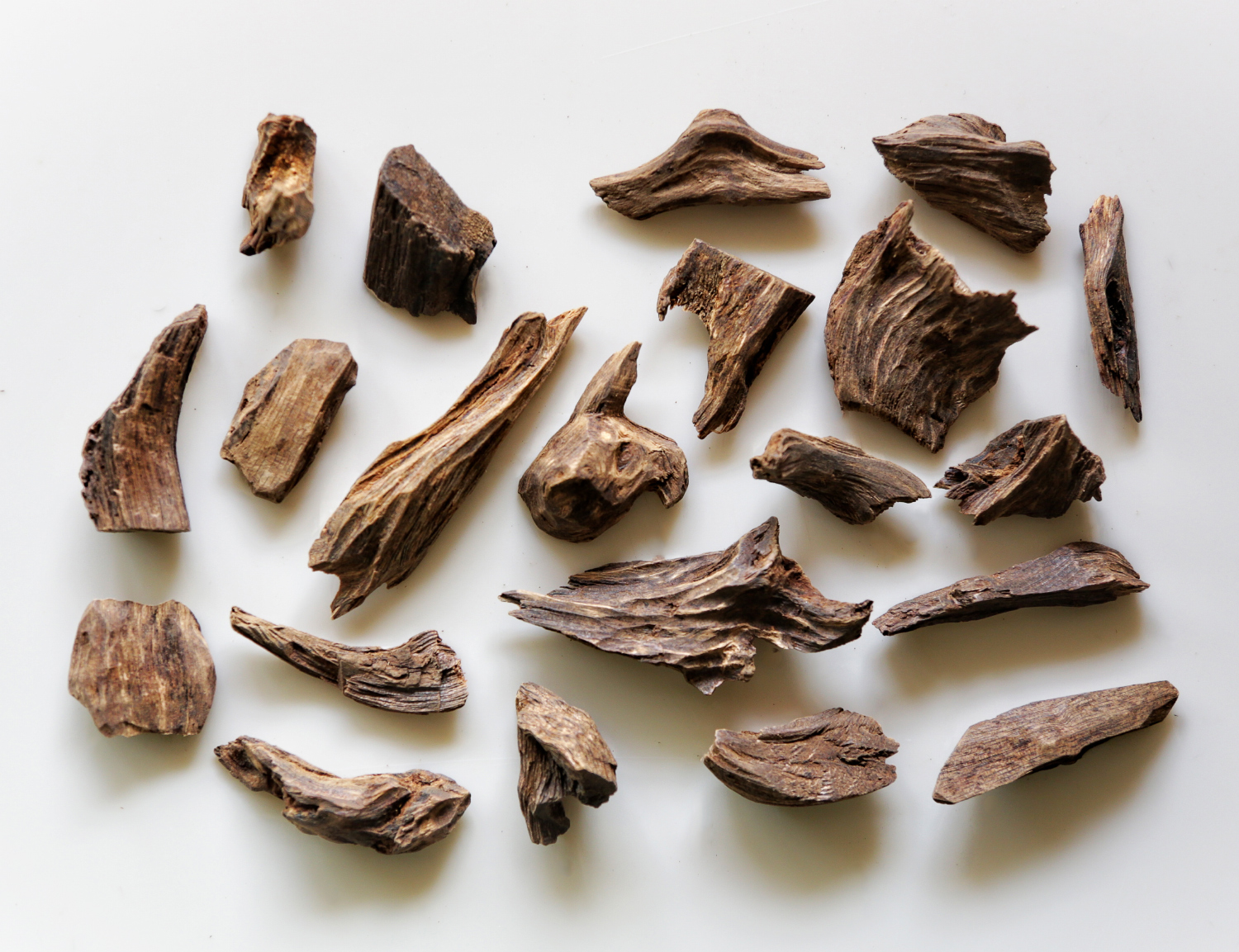
Surprisingly, from the entire tree, there were very few chips set aside. The bulk of the batch was reserved for carving, and these are of the few pieces that remain to be enjoyed the way oud was meant to be enjoyed: sizzling on your heater.
When they were busy cleaning the wood right after harvest, the big bosses wouldn’t hear anything about making oil from this wood. Whatever position I held with them wasn’t sufficient to score me any of the cleaning powder or smaller shavings. All was reserved for the bosses’ special brew of whiskey which they had made from the wood as they smirked and gave me sideways glances.
“This Muslim doesn’t really understand the value of a fine Scotch made from kinam dust, but we sure do!” their jubilant eyes said sarcastically.
My message was quite the opposite: “You non-Muslims only understand Scotch, and fail to see this could well be the oil of the century. Scotch, even if it had any value, is gone after a few shots; whereas even the smallest yield of oil can go a long way when distilled from such colossal agarwood.”
The bosses wouldn’t even part with the kyen (which needed to be removed so the seah could sink). I had to wait three years and watch the bosses file for bankruptcy before they gave me anything at all from the Sekadau.
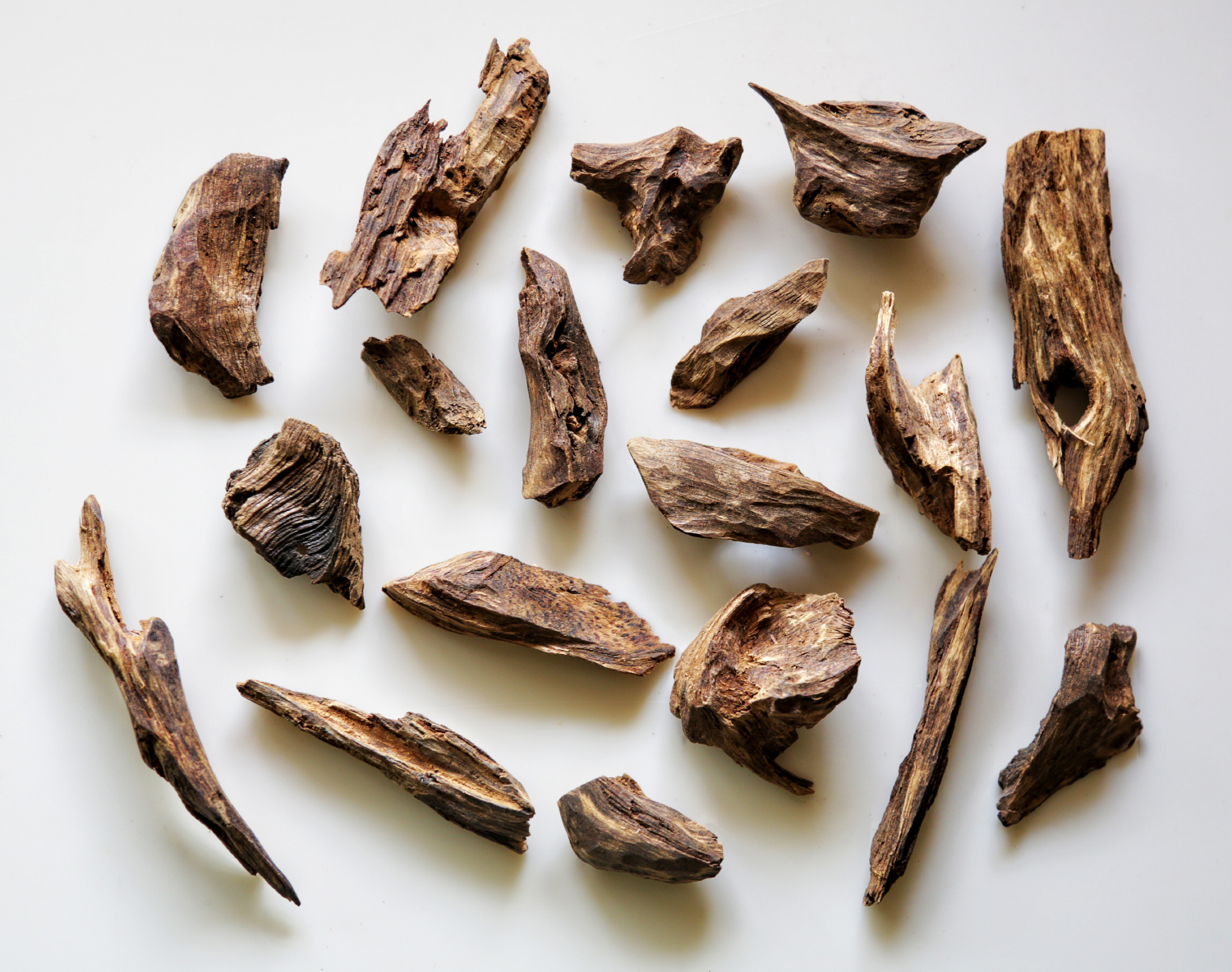
In retrospect, I am thankful to have all the kyen (it is, according to most, shin kyara) and a few sinking medallions which I will take with me to the grave. Yet all I keep thinking about is the kind of oil we could have made if they didn’t insist on the Scotch idea.
The best of plans is surely God’s, and oil or no oil, what you have here is the wood of your olfactory lifetime. Only suited to slow gentle heat, it will open a world of sensual bewilderment like no other agarwood can with the possible exception of the other kynam varietals.
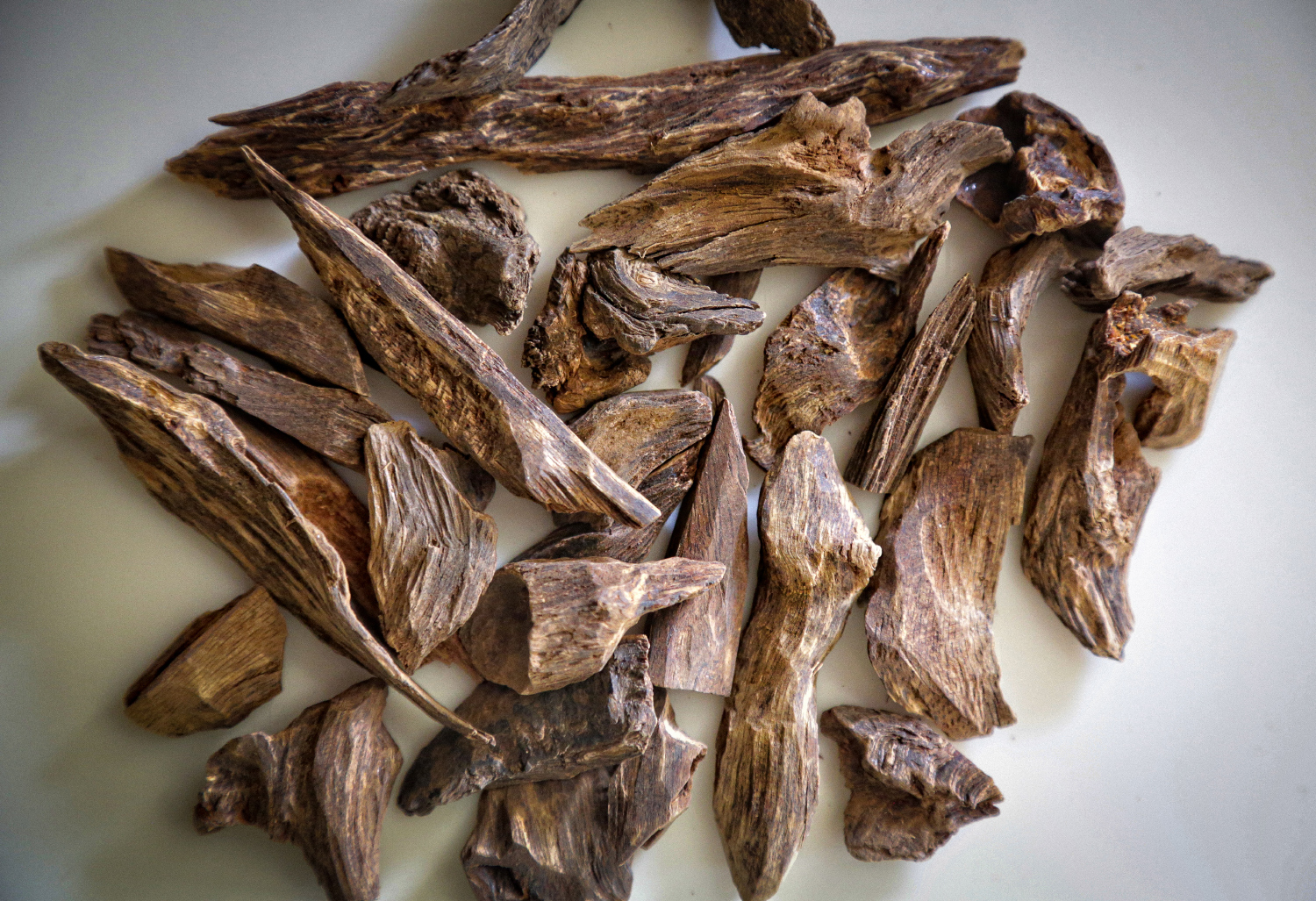
This is a higher-grade batch than Royal Sekadau (the kyen batch), giving you pieces from the sinking-grade batch. The aroma is still 100% Sekadau, with the peices denser and the burn longer.
The scent is piercing, not the warm, soothing kind. An aroma on par with the blackest, hardest sinking nuggets you’ve smelled — even better than many. Instead of clinking metallic-sounding chips, these are soft, even delicate. Yet, in a blind test, you’d equate the scent with heavy-resin sinkers.
Reviews of the standard batch…
This is a Borneo wood, and one of the best I’ve tried. Fairly potent wood – a relatively small amount produces a significant amount of aroma. Ensar’s description was spot-on, in that the scent profile of these chips reminds of the heavy resin sinkers. Some of my favorite woods in my very large collection are this “kyen” style, with thin long striations, the wood resinated but softer overall than the solid, rock-hard resin of others. It’s like they are bursting with the fragrant oil that will become resin one day, if left to harden in the tree. Interestingly a lot of kyara and shin-kyara is like this also – softer, kyen-looking type wood.
To me the scent profile is all that really matters – and this is a delightfully complex and charismatic Borneo wood. This is an aroma that is difficult to describe, due to how exotic it is. A bright, piercing aroma, deeply woody – an “ancient tree” quality that I do not think can be imitated by cultivated wood or by much younger trees. While from Borneo island, there are some scent notes, particularly on the opening that remind me of a very rare and exceptional batch of Malaysian wood I have. Colors are helpful in these situations, and this one has a yellow, nutty quality to it. There are sour, salty and bitter elements, in a good way. The earthy, nutty qualities become more manifest over the session. This does really well on lower heat and also on higher heat, as the heating session progresses. I start most woods at 150C on my Mermade Golden Lotus heater, and then move toward 250C over time.
Related products

While many are under the impression that they've smelled kinam, many oud lovers might smell kinam once in their lives. Or never. Kinam is the Red Sulphur of all things fragrant. The Holy Grail of olfaction. It's the
This product has multiple variants. The options may be chosen on the product page
Because there’s so much buzz about kyara and so many haven’t had the chance (or the funds) to…
This product has multiple variants. The options may be chosen on the product page
Whenever I open the jar my nose…
This product has multiple variants. The options may be chosen on the product page
If you have any Filipino oud chips, I-m sure you know that now is not the time to sell any. Now-s the time to keep them. Just as you-d expect, we-ve seen oud prices skyrocket across the Philippines within the past two
This product has multiple variants. The options may be chosen on the product page