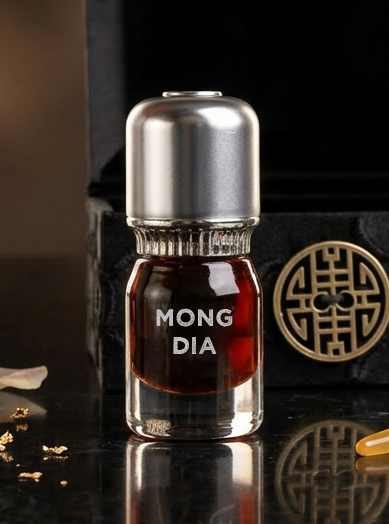
Mong Dia
$790
Dense and unapologetically expensive…
Most people will go their entire lives without smelling truly old musk. Not vintage perfume. Not lab-aged ingredients. Real old musk – pods that existed long before modern perfumery.
There are smells that exist. There are smells that existed. And then there are smells that, by every reasonable account, should no longer exist but somehow do.
This is one of them.
You notice it the moment you pick up one of the pods.
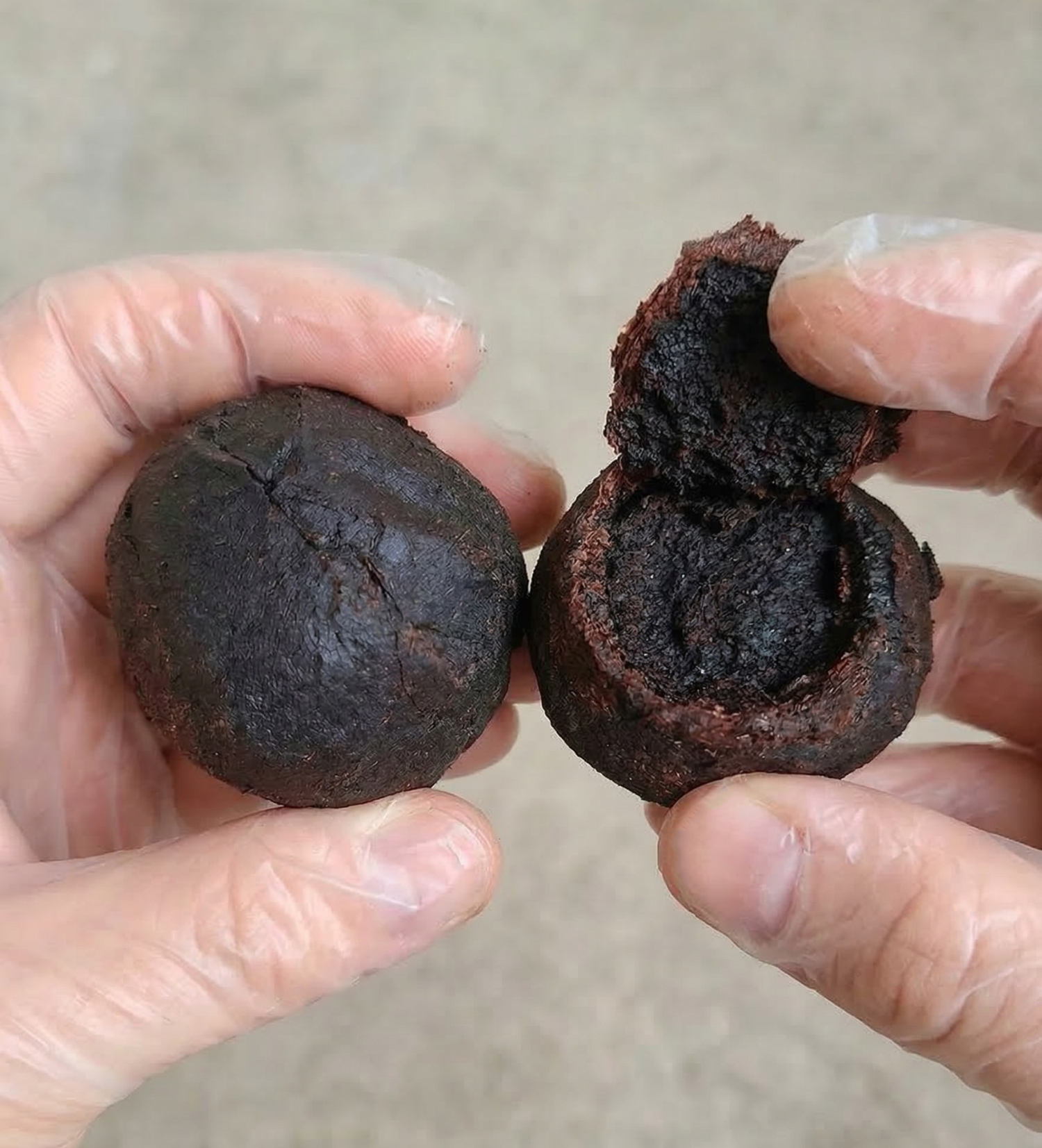
They look almost ordinary at first – small, dark, unassuming pods.
But the leather has turned nearly black with age. It feels smooth to the touch and firm under the blade, a surface that has had a very long time to become what it is.
When opened, the grains inside are still moist.
People who have spent decades handling musk and who have examined these pods firsthand believe they may be several centuries old. You recognize very old musk right away.
Musk served as currency long before it entered perfumery. Rulers kept it in their treasuries as a form of wealth. It was more stable than coin and more portable than land. The Prophet ﷺ described paradise as carrying its scent. Across generations, sultans collected it and passed it down the way irreplaceable things are passed down.
These Mongolian pods followed that same path, moving quietly from one custodian to another until they eventually entered the treasury of the late Sultan Qaboos.
We stopped dealing in musk entirely in 2004. Deer populations were declining rapidly and no perfume justified contributing to that situation. What we had, we kept. What we didn’t, we went without – for over a decade, until Russia established legal licensing and enforceable harvest quotas for Siberian musk. Only then did we cautiously begin working with musk again.
But this isn’t Siberian musk.
Siberian is direct and forceful – its sharp, urinous, animalic character fills a room quickly.
Mongolian pods are almost hairless compared to their Siberian cousins, and the scent carries a bitter-herbaceous character with a sweetness underneath it – faintly coastal, loosely reminiscent of ambergris, but more truffly.
The grains are steeped directly into Kupang sandalwood distilled in 2010 – sixteen years of slow transformation in the oil, long enough to shed every trace of sharpness and settle into a profile that’s beautifully rich, creamy. Soothing.
The grains remain inside the oil, continuing to shape the scent over time, the way classical ghālia compositions have always been made.
And then there is the attar composed by Sultan Qaboos himself.
The Sultan composed this attar for himself. Whatever remains today is all that exists. He couldn’t have known it would one day end up here.
Incorporating it required patience – the way it behaved alongside the Mongolian grains demanded extensive revision before the balance felt right. What it ultimately brought to the blend is what the Mongolian grains alone couldn’t produce – a rouge-like richness that pulls the musk and sandalwood into something more complete.
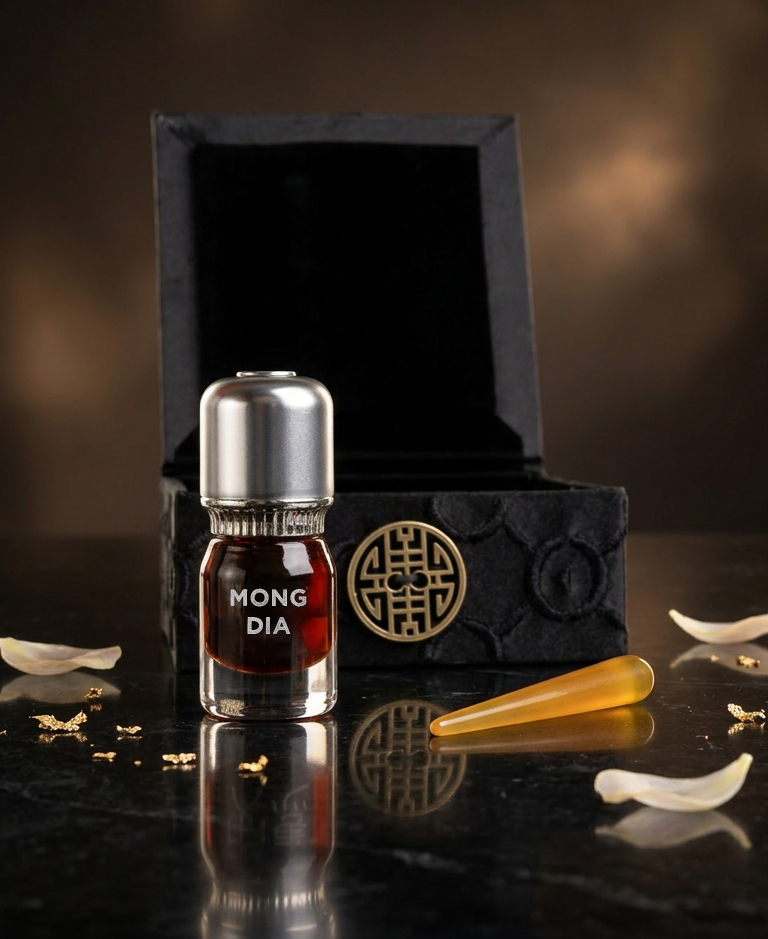
Black tea runs through the warmth of the sandalwood, dark and slightly tannic, keeping the musk’s truffly depth from becoming too dense. Honey folds into the grain of the scent and deepens the darker tones already present in the musk, while carob brings an unmistakable cocoa-like darkness that sits naturally beside the truffle facets of the Mongolian grains.
At moments the composition lifts unexpectedly. A soft apricot brightness appears within the warmth of the blend, while pineapple brings a faint tropical shimmer that keeps the darker tones from closing in. Roman chamomile moves through it all like a soft current — herbal, golden, slightly floral — easing the transitions between the darker and brighter notes so that nothing dominates.
People who own Mongolian Musk, the perfume that uses the same grains, tend to say the same thing: it’s addictive. They expect something challenging. What they find instead is something they keep reaching for. They wear it two days running, which they don’t do with other scents.
Descriptions vary – chocolate, truffle, honeyed cinnamon, black tea – because the scent keeps shifting on skin, revealing new facets hour by hour. That’s how genuinely old musk behaves. You won’t fully decode it in a single wearing. Most people stop trying and simply cave in.
In an attar, they have more room.
A pure attar removes every barrier between the oil and the skin. No alcohol, no diffusion. Instead, sandalwood that has been aging since 2010, musk pods that may be centuries old, and the Sultan’s own attar meet the skin together from the first drop.
It’s genuinely unusual for things like these to meet in the same bottle.
And that wasn’t something we engineered. It came with the territory.
What we did was recognize what was in front of us and compose something worthy of it. Once this particular combination is gone, it cannot be reassembled – not at any price.
If you have never encountered truly old musk before, opportunities to do so are becoming rare. And once you have smelled it, most modern perfumes will never quite satisfy you in the same way.
You won’t find this again. That’s not a sales line.
Related products

Lavender leaves, sage, and high-hill tea fields diverge beneath a rainy cloud of…
This product has multiple variants. The options may be chosen on the product page
You've probably experienced the same I do every time I visit a perfume shop: everything
Roughed up with a cigar and black whale rocks, that it takes everything you…
This product has multiple variants. The options may be chosen on the product page
The oud itself is already almost a decade aged, and brewing inside of it there’s…
This product has multiple variants. The options may be chosen on the product page