
Kam Kyoryo
$149
Navigating the oud landscape can be overwhelming. Where do you start? Why are there…
Oud is learned, it’s not something you can just try (or read about) and then expect to know everything overnight. Just like tea appreciation or cigar connoisseurship or recognizing scales in music, oud is a journey.
If you’re reading this it means you’ve already embarked on this journey and you’d like to dive deeper into this magical world. This may be your first Cambodian oud purchase, or your tenth. Either way, at EO it’s all about facilitating that journey. To let you experience the finest oud at every level.
It could be through discovering what traditional Cambodian oud smells like in the first place, or like what you have here – exploring through contrast, smelling a Cambodi that shows you a different dimension to what you’d normally expect to coax out of Kampuchea’s crassnas.
Cambodian oud doesn’t typically showcase a smooth incense heart like you’ll smell in Kam Kyoryo. Quite the contrary, it’s typically light and fruity with notes of apricot or peach jam, often replete with auxiliary notes.
The drydowns are usually a bit tart or sawdust woody. It’s not supposed to smell like green incense dipped in aged puerh, like crassnas jacked up with raw resin to show their muscle as is the case with this Cambodi.
Navigating the oud landscape can be overwhelming. Where do you start? Why are there such price discrepancies? How does Kam Kyoryo compare to oud that elsewhere would cost you $500 per gram?
That’s why it’s crucial to have authentic benchmarks.
As your nose learns the nuances, you begin to discern between fermentation and auxiliary notes and you start being able to tell apart oud from different regions, and tell the difference between steam or CO2 extraction. Before too long, you begin to notice degrees of quality within regions, and before you know it you’d be able to tell cultivated oud from wild oud like you’d distinguish between black and blue. And all the while as you progress, you’d notice you enjoy oud more and more!
You’ll appreciate how in Kam Kyoryo the jammy profile of your typical Cambodian oud is replaced by this just-about-fruitless creamy incense tone that makes it a delectable addition to your palette, and a fantastic daily swiper.
Once you can train your nose to the point of being able to tell between wild and cultivated oud, despite the distillation style, your collection would have instantly quadrupled in value in the sense that you can get that much more out of every whiff, resonating with these trees and fully indulge in the miracle that is oud.
You might remember the olfactory savant I spoke about years ago, how I gave him a swipe of oud and challenged him to identify it. Not only did he correctly specify the origin, but added that it smells about 80% wild and 20% cultivated. That was exactly the ratio of that oil!
Not only do such noses exist, but you can achieve such a level of olfactory refinement. To be fair, though, that man had been distilling oud for about thirty years at that point…
It’s a great responsibility to be the go-to source for artisanal oud. It requires from us a high standard on all fronts since if you’re new to oud we must ensure that your benchmarks are accurate, while there’s no messing around with a seasoned oudhead. You expect the best, so that’s all we strive to give you.
Most Cambodian ouds you’ll encounter will be of a yellow/brown profile. If you’re lucky enough to score a quality vintage distillation, you’d discover a red liqueur-like depth that made Cambodian oud famous.
The brown/yellow, bright fruity run-of-the-mill Cambodis are typically from lower-grade cultivated agarwood (often imported from Thailand, which is why they often smell eerily similar!) while you’d expect the bittersweet red aroma only from old-stock high-grade wild harvests. Kam Kyoryo, on the other hand, takes you to greener pastures…
This oud was co-distilled using mostly cultivated agarwood, but a portion of the brew was a wild harvest used to bolster the profile. Part of the wild harvests are from trees that are still growing – the resin is chiseled out and the tree is allowed to continue growing. In the past, the tree would have been cut down as soon as it was found, but now that there are practically no wild trees left, hunters are more conscious of how to obtain and prolong the ability to obtain wild resin.
It’s no small feat to have this sustainable approach. It takes a three-day trek into the jungle to come back with only a little bit, which you gather over months. So, you can imagine how long you have to wait in order to distill an exclusively wild Cambodi this way…
But it’s not just the apportioning of the grades of wood that gives Kam Kyoryo its distinct profile, but the way these harvests were distilled.
If you ever wondered what ‘artisanal’ oud distillation means, distill Cambodian agarwood and try not to get the fruity jammy tones!
Instead of bright notes of overripe apricot, Kam Kyoryo greets you with a lush herbaceous blast layered in clouds of incense. Smell deeply and you’ll pick up on a beautifully discreet mintiness – not exactly in a mentholic sense, but rather mint’s ‘piercing’ quality which in oud terms often hints at quality (hence its rarity).
You wouldn’t expect this ozonic petrichor green filtered through vapors from low-temp oud chips bubbling in Cambodian oud. And after a few swipes, you discover how addictive it is!
What you have here is the same quality oud that elsewhere sells for $500 per gram. We could have ‘honored’ the market and followed market pricing, asking $1,500 for a bottle – because that’s the benchmark that’s out there. But that’s the problem!
We want you to experience oud properly, to have an authentic journey; that’s all it has ever been about.
So, rather than charge you $500 a gram for this oil, we’re going to giving it to you for a fraction of it’s value, as we believe an educated consumer is our greatest asset.
An oud journey without a Cambodi to reach for is like wearing only one boot for the hike. Kam Kyoryo is worth it for the lessons it has to teach alone, and worth it even more because it’s difficult for me to imagine someone who loves oud who won’t be tempted to take four fat swipes every time you uncap the bottle!
Featured Testimonials…
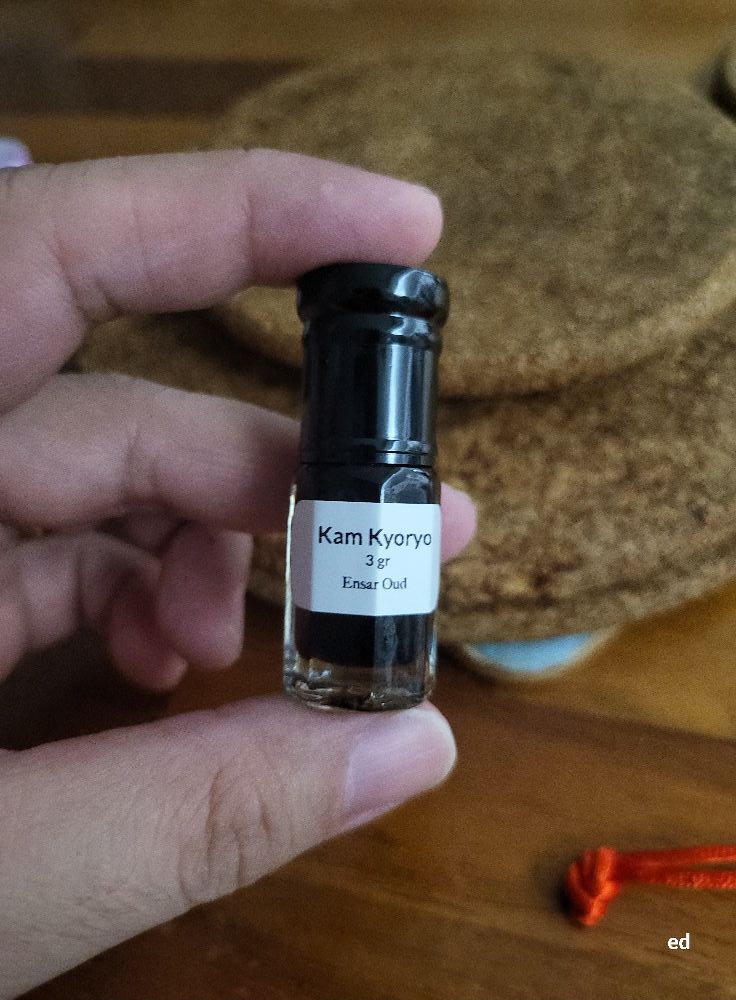
wow I’m blown away with this cambodi… totally different from what I have tried of cambodi cologne….
Woody medicinal incense…. mind buzzing. I cant believe a cultivated cambodi can be so rich n intense … 0 barn….
Being a newbie, I got this Vietnamese vibe from this oil.. especially medicinal bitter sweet vibe… I might be wrong haha
But the quality is way beyond its price, thanks Ensar Oud showcasing high quality cultivated oud oil… in addition to the current 15% discount, guys and ladies dont sleep on this stunner.
UPDATE:
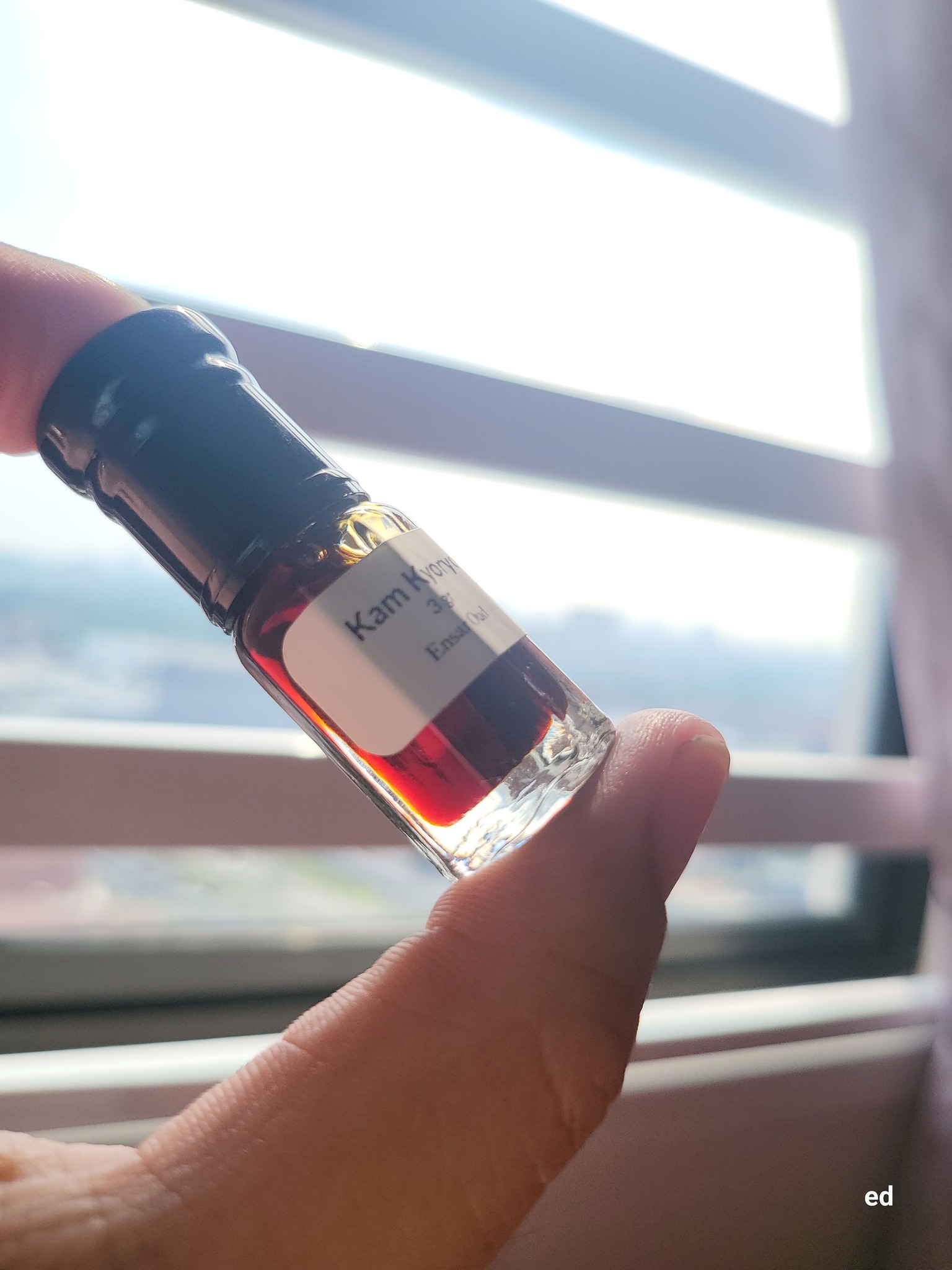
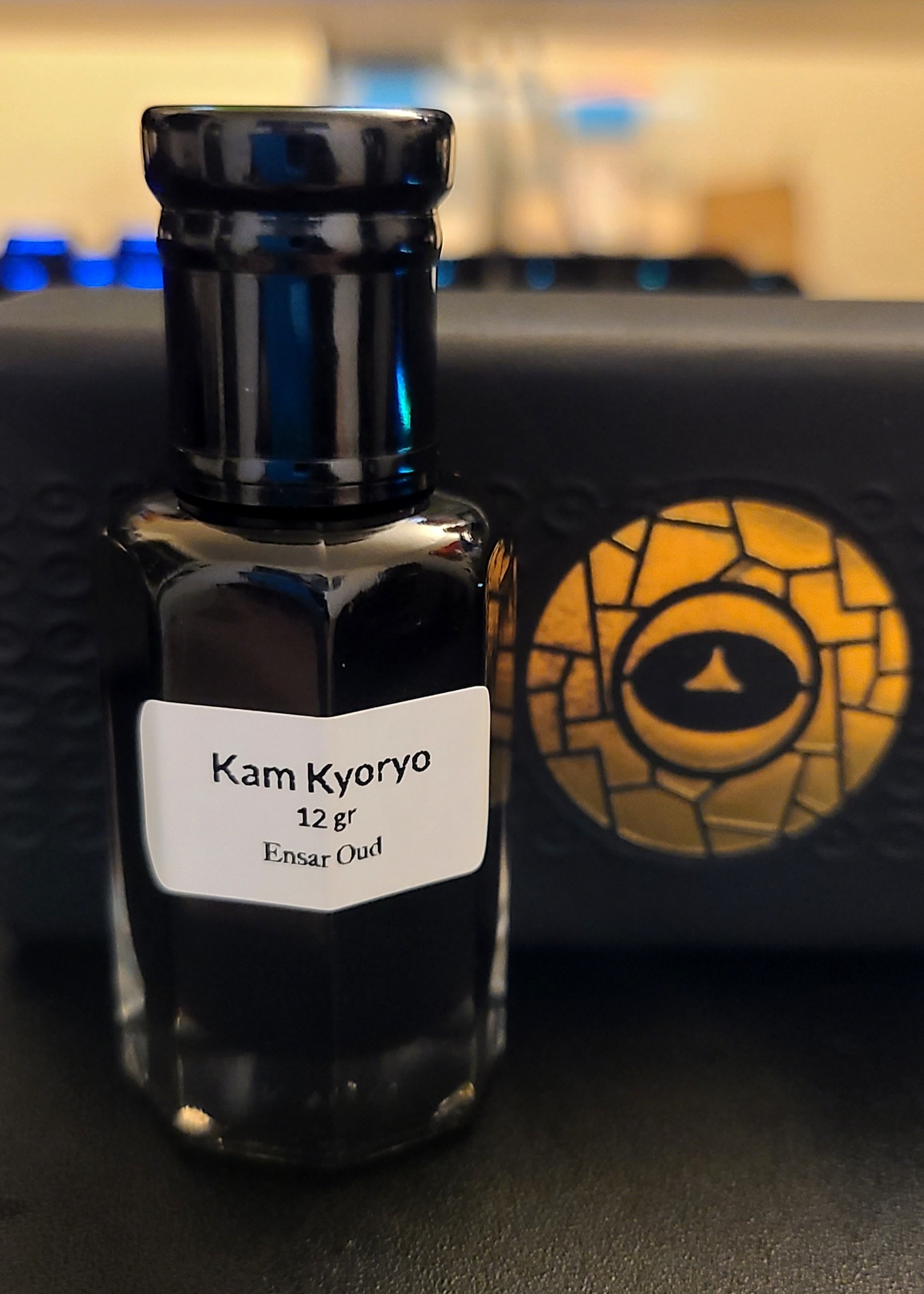
Related products

These were not oils that you sold to make money. Scents like these are impossible to attach a dollar figure to, because they are priceless. These were brand builders. Oils that not only made a company but spurred an entire market where there was none before

We can't go back in time four years or deflate the astronomical costs of wild Vietnamese agarwood. We can't un-string the $50,000 bangles, un-carve the miniatures, or revive the jungles and plant back the centennial trees. It takes

Exactly as if you're inhaling bubbling burst of vapor straight from a burning oud chip, dense green heart notes embody Sultan Orhan's agar kernel. This piercing oud wood smokiness makes this oil especially therapeutic, with a scent that