Ensar’s old laptop used to be decorated with Cambodian visa stickers. I’ve gone through six passports, thanks in part to all the pages Cambodia alone has consumed. No country gets more of our passports than Cambodia.
We keep going back – for the wood, we tell ourselves, and that’s true enough. But if you’ve followed us long enough, you know the trips are never really just about the crassnas. This time we came home wanting to do something different: not a neat oud, but a tribute to the whole country the oud comes from.
Because outside the world you and I live in, Cambodia isn’t known for its oud at all. It’s known for a river town whose pepper the world’s best kitchens fight over. For a province that still boils its sugar over open fire, the old way, one batch at a time. For a jungle temple where the incense hasn’t stopped burning in nine hundred years. The oud was always there too – it’s why the soil grows what it grows – but it was never the only story.
So this month, our Cambodian ouds become the center of fragrances composed to conjure the soil each was born from – the pepper fields, the sugar sheds, the lotus on the temple moats – rendered in the aromatics that speak their language.
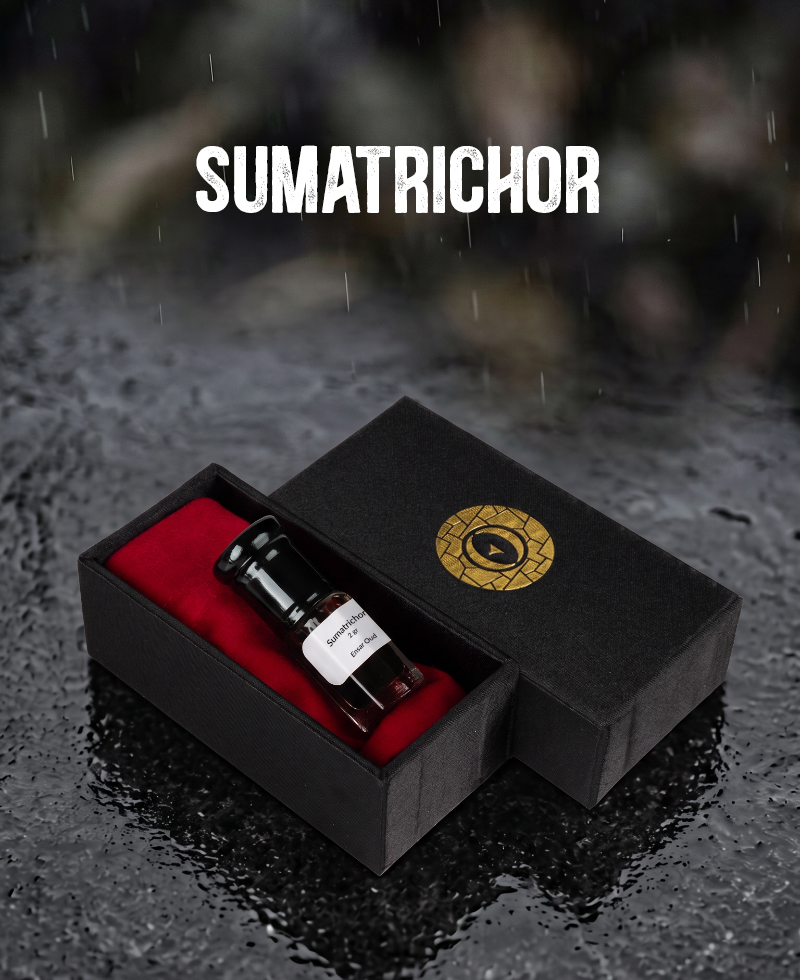
Cambodia makes caramel twice. Once in Kampong Speu’s tin-roofed sheds, where palm sap darkens over wood fires. And once in the tree – where crassna resin spends decades ripening inside the heartwood into the slow, syrupy depth the whole oud world knows as Cambodi.
That second caramel is what this perfume is about. At its core brews a duo: Cambodi Caramel – “bold, red, punchy and in my face” – and an unreleased Samraong Tong distillation. It opens slightly cool first—a menthol breath, like biting into something minty before you taste what’s underneath. Then the tasty crassna oozes out like molasses, thick enough to see it fall in a ribbon, with the mineral tang of Manuka honey right behind it. Dried figs, sticky at the edges, split open to show their red center. Underneath, benzoin melts in slowly, the way vanilla bean softens into hot milk.
And running through the whole thing, low and constant, a thread of proper Cambodian oud incense, the kind that clings to your clothes after standing near oud chips bubbling on a burner.
· $999+ (net) orders include a 2 g bottle of Samraong: Sucre et Fumée
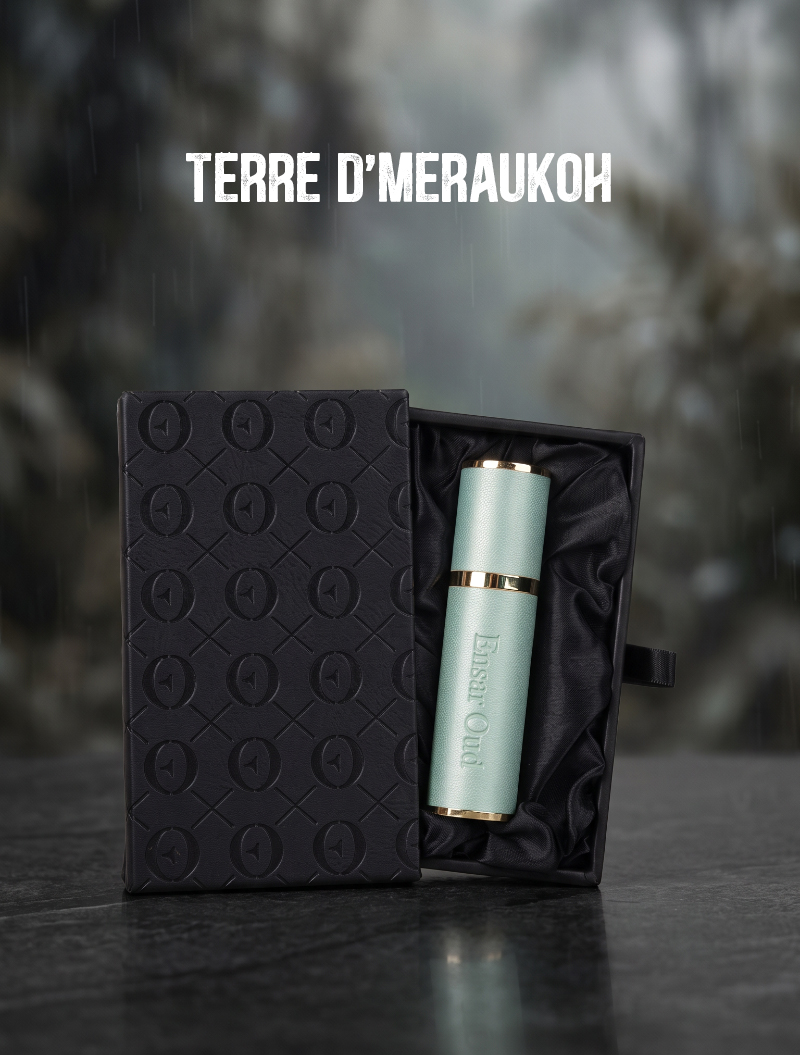
Incense has burned at Angkor for nine hundred years. Empires fell, the jungle came and went – the incense never stopped. And every morning, on the moats that ring the temple, the lotus opened to meet it.
At its heart is Encens d’Angkor – Cambodian crassnas distilled by a method we developed to coax out something crassna doesn’t usually give: an incense tone folded inside the oil itself, riding over the warm vanilla and dark caramel.
Understand what that means for this composition: the incense in this perfume is not an accord. It’s not a frankincense overdose dressing up a plain oud. The smoke was inside the wood. We only managed to bottle it.
Our signature lotus extract drifts in cool off the water to greet it, frankincense catches as the oud warms into its caramel depths, and sandalwood carries the oud-incense drydown – long, honeyed, resinous – deep into the evening.
$1,500+ (net) orders include:
· Samraong: Sucre et Fumée (2 g, Attar)
· Angkor: Encens et Lotus (10 ml, Pure Parfum)
Tip: Mist the spray, then seal it with a swipe of Samraong: Sucre et Fumée. Temple incense over molten palm caramel. For the length of a day, you’re the only person on earth wearing Cambodia at dawn, before the first tour bus pulls in.
Every chef on earth knows Kampot. The world’s only pepper with its own appellation – protected the way the world protects its rarest saffron, grown on vines off the Cambodian coast – comes from this one sleepy river town in southern Cambodia. Ask a Parisian three-star kitchen where pepper reaches its peak, and they’ll say Kampot – the King of Pepper – without looking up.
Here’s what the chefs don’t know. Cross the river and drive ten minutes, and the pepper farms give way to salt fields – white pans stretching toward the sea, harvested by hand every dry season. One town, salt on one side, pepper on the other. The two oldest seasonings on the table, growing up as neighbors, and nobody outside Cambodia seems to have noticed.
We noticed, because we’ve been there for a third crop the chefs know nothing about. In the same wild, fog-wrapped jungle that grows Kampot’s pepper, grows what remains of the rarest chapter in oud: wild Kampot crassna.
Kampot’s wild trees were hunted to near-silence decades ago, and finding a genuine one today is closer to archaeology than sourcing. And no oud is easier to love than the one they nearly loved to death: dark red fruit cooked down to jam – fig, date, wild berries – over honey and soft resin, a touch of tobacco and old leather underneath, and none of the funk of Hindi ouds, none of the sourness of overfermented distillations, nothing you have to learn to forgive. It’s the profile that converts first-timers on a single swipe, and the one veteran collectors circle back to after years in the wilderness of acquired tastes.
The French, who built a presidential residence on top of Kampot’s Bokor mountain and villas along the riverfront a century ago, have an expression: poivre et sel. Pepper and salt – it’s what they call hair going gray. A man of a certain age. Seasoned. We’re naming this oud for that expression, not only because the oud is aged, but because so little of it is left – the wild trees hunted thin decades ago, until what remains is rare rather than ripe. It doesn’t charm you. It just sits there being right.
So the name is the recipe. Five kinds of pepper cracked bright over the opening, red ripening sweet underneath, laid over green mango and pomelo straight from the morning market, with lemongrass and a root-bite of galangal keeping the top honest. The heart is what Kampot smells like at dusk: frangipani off the temple walls, jasmine, a breath of ylang ylang warming over the fields.
And the salt? In artisanal perfumery, salt has a proper name: ambergris. Sun-cured, mineral, carrying the sea in it the way the salt pans carry the tide, benzoin (the region’s own resin), vetiver like smoke off the rice paddies, a curl of tobacco from the veranda, sandalwood to close. And actual raw Cambodian agarwood resin in the carrier.
$2,500+ (net) orders include:
· Samraong: Sucre et Fumée (2 g, Attar)
· Angkor: Encens et Lotus (10 ml, Pure Parfum)
· Kampot: Poivre et Sel (30 ml, Eau de Parfum)